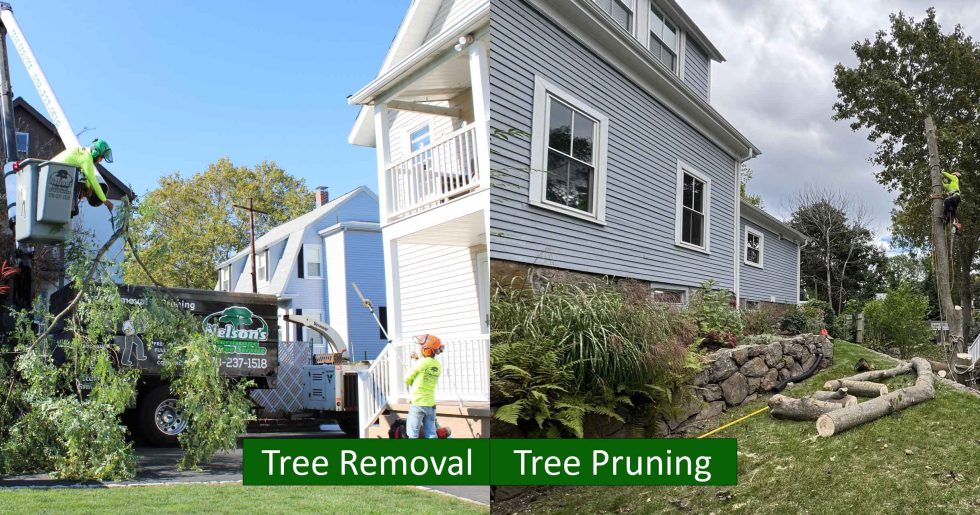
Many homeowners use the terms “tree trimming” and “tree pruning” interchangeably, assuming they’re the same thing. While both practices involve cutting away parts of a tree, they serve distinctly different purposes in tree health and landscape management. Tree trimming vs. tree pruning isn’t just a matter of semantics—understanding the difference can help you maintain healthier trees, prevent property damage, and make smarter decisions about your landscape care.
The confusion is understandable, especially when trying to maintain your property’s trees without professional guidance. That’s where expert knowledge becomes invaluable. The professionals at Nelson’s Hardscape & Tree Service have spent years helping property owners understand these critical differences and apply the right techniques at the right time. With proper knowledge, you can ensure your trees receive the care they truly need, whether that’s trimming for aesthetics or pruning for health.
What Is Tree Trimming?
Tree trimming focuses primarily on maintaining a tree’s appearance and controlling its growth pattern. Think of it as giving your tree a haircut—it’s about shaping, sizing, and creating visual appeal in your landscape. Trimming typically involves:
- Cutting back overgrown branches that affect the tree’s shape
- Removing hedges and shrubs to maintain uniform appearance
- Clearing branches that obstruct views, power lines, or structures
- Managing canopy density to allow better light penetration
- Controlling the overall size and spread of ornamental trees
The primary goal of trimming is aesthetic enhancement. When you notice your trees looking shaggy, blocking windows, or growing too close to your home, trimming is usually the answer. This process helps maintain the visual harmony of your landscape while keeping trees from interfering with buildings, walkways, or utility lines.
Most property owners schedule trimming on a regular basis—typically once or twice per year—to keep their landscape looking manicured and intentional. Spring and late summer are popular times for this maintenance work.
💡 Expert Tip
Never trim more than 25% of a tree’s canopy in a single session. Excessive trimming can stress the tree and make it vulnerable to diseases and pest infestations. If your tree needs significant reduction, spread the work across multiple seasons to protect its health.
What Is Tree Pruning?
Tree pruning is a more specialized practice focused on the health, safety, and structural integrity of the tree itself. While trimming is cosmetic, pruning is therapeutic. It involves the strategic removal of specific branches to improve the tree’s overall condition and longevity.
Professional pruning addresses several critical needs:
- Disease management: Removing infected or diseased branches prevents spread
- Dead wood elimination: Cutting away dead or dying limbs reduces hazards
- Structural improvement: Shaping growth patterns for stronger branch architecture
- Fruit production: Encouraging better yields in fruit-bearing trees
- Safety enhancement: Removing weak branches that could fall during storms
Pruning requires a deeper understanding of tree biology and species-specific growth patterns. It’s not just about cutting—it’s about knowing where to cut, when to cut, and how much to remove to promote optimal health. Improper pruning can permanently damage a tree or even kill it, which is why this work often requires certified arborists with specialized training.
Unlike the regular schedule of trimming, pruning happens based on the tree’s condition and specific needs. Some trees benefit from annual pruning, while others might only need attention every few years. The timing also varies by species—some trees should be pruned in late winter when dormant, while others do best with summer pruning.
Key Differences Between Tree Trimming vs. Tree Pruning
Understanding these differences helps you communicate clearly with tree care professionals and make informed decisions about your property’s needs.
When Does Your Tree Need Trimming?
Recognizing when your trees need trimming helps you maintain curb appeal and prevent property interference. Here are the telltale signs:
Your trees likely need trimming when branches start touching or hanging over your roof, creating potential entry points for pests or causing damage during storms. Similarly, if limbs are growing into power lines, immediate attention is necessary for safety reasons—though utility companies often handle this specific situation.
Visual obstruction is another common indicator. When trees block views from windows, obstruct security cameras, or create blind spots in your driveway, strategic trimming restores visibility without sacrificing the tree’s presence. Overgrown hedges that lose their defined shape or trees that have become too dense, blocking sunlight from reaching your lawn or garden beds, also benefit from trimming.
For properties with tree cabling systems installed, regular trimming helps maintain the effectiveness of these support structures by preventing excessive weight accumulation on stabilized branches.
When Does Your Tree Need Pruning?
Pruning becomes necessary when you notice signs of distress, disease, or structural problems. These situations call for the health-focused approach that pruning provides:
Dead or dying branches are the most obvious indicators. These limbs often appear brittle, lack leaves during growing season, or show discolored bark. Removing them promptly prevents decay from spreading to healthy parts of the tree and eliminates falling hazards.
Disease symptoms like fungal growth, unusual discoloration, oozing sap, or cankers require immediate pruning attention. Early intervention through strategic pruning can often save an infected tree by removing compromised sections before the disease spreads further.
Watch for crossing or rubbing branches—where two limbs grow against each other, they create wounds that invite pests and disease. Pruning eliminates this friction point and promotes better structure. Similarly, branches with narrow, V-shaped crotches are structurally weak and prone to splitting. Proper pruning removes these vulnerable connections.
Storm damage is another clear signal for pruning. After severe weather, trees often sustain cracked limbs, partially broken branches, or torn bark that needs professional attention. In these situations, emergency tree service and storm clean-up followed by proper pruning can save an otherwise damaged tree.
Myth vs. Fact: Tree Trimming vs. Tree Pruning
Myth: Trimming and pruning are the same thing—just different words for cutting tree branches.
✓ Fact: Trimming focuses on aesthetics and controlling growth, while pruning targets tree health and structural integrity. They require different techniques, timing, and expertise levels.
Myth: You can trim or prune your trees any time of year without consequences.
✓ Fact: Timing matters significantly. Pruning during active growth can stress trees and attract pests, while species-specific considerations determine optimal trimming schedules.
Myth: More aggressive cutting means faster results and better tree growth.
✓ Fact: Over-cutting severely stresses trees and can lead to disease, pest infestation, or death. Professional arborists follow the “25% rule” to protect tree health.
The Tools and Techniques Behind Each Practice
The equipment used for trimming versus pruning reveals much about their different purposes and precision levels.
Trimming tools tend toward larger, more aggressive cutting implements designed for volume work. Hedge trimmers—both manual and powered—quickly shape shrubs and small branches. Pole saws extend reach for higher limbs, while standard pruning saws handle thicker branches that need removal for aesthetic purposes. The focus is on efficiency and achieving uniform appearance across multiple trees or large sections.
Pruning tools are more specialized and precise. Hand pruners (or secateurs) make clean cuts on smaller branches up to three-quarters of an inch thick. Loppers provide leverage for branches up to two inches in diameter. For larger limbs, pruning saws designed for clean, precise cuts minimize damage to the remaining tree structure. Certified arborists often use specialized equipment that allows for surgical precision in removing exactly what needs to go while preserving everything else.
Technique matters as much as tools. Pruning cuts must be made at specific angles and locations relative to branch collars and nodes to promote proper healing and prevent disease entry. Trimming is less technical but still requires knowledge of growth patterns to avoid creating ugly stubs or unbalanced shapes.
DIY or Professional Help?
The choice between handling tree work yourself or calling professionals depends on several factors related to the tree trimming vs. tree pruning distinction.
Basic trimming of small shrubs, hedges, and low branches can be a manageable DIY project if you have the right tools and aren’t working near power lines or structures. Keep cuts small, work safely from the ground or a stable ladder, and never attempt work near utility lines.
However, pruning—especially for large trees, diseased specimens, or anything involving structural assessment—should be left to certified arborists. The stakes are simply too high. Improper pruning can permanently damage trees, create safety hazards, or inadvertently spread disease to other trees on your property.
Professional services bring invaluable benefits beyond just technical skill. They carry proper insurance for property damage and worker injuries. They understand species-specific needs and local growing conditions. They recognize disease symptoms and pest problems that untrained eyes might miss. For comprehensive tree care, tree pruning and tree removal services ensure your landscape receives appropriate attention.
Additionally, professionals offer related services that complement pruning and trimming work. After major pruning or removal, stump grinding eliminates unsightly remnants. Wood chipping & disposal handles the considerable debris generated by tree work, while lot cleaning restores your property to pristine condition afterward.
Cost Considerations and Long-Term Value
Understanding the investment required for proper tree care helps you budget appropriately and recognize the value of professional services.
Trimming typically costs less per session since it’s more straightforward work focused on accessible branches and aesthetic goals. However, because it’s performed more frequently—often twice yearly—the annual investment can add up. Most homeowners spend between $250 to $500 per trimming session for average-sized properties, though prices vary based on tree size, number, and accessibility.
Pruning generally costs more per visit due to the expertise required and the precision work involved. Certified arborists command higher rates, and the assessment process takes more time. Expect to pay $400 to $800 or more per session, depending on the complexity and tree size. However, since pruning happens less frequently and focuses on health rather than appearance, the long-term return on investment proves substantial through extended tree life and reduced hazard risks.
The real value becomes apparent over years. Properly pruned trees live longer, resist disease better, and pose fewer safety threats during storms. They also increase property values more than poorly maintained specimens. A mature tree can add thousands of dollars to home valuations, making professional care a worthwhile investment in your property’s worth.
Regular lawn care and lawn mowing alongside proper tree maintenance creates a cohesive, well-managed landscape that enhances both beauty and value.
Frequently Asked Questions
Q: How often should I have my trees trimmed versus pruned?
A: Trimming is typically performed once or twice per year to maintain shape and control growth, usually in spring and late summer. Pruning happens on an as-needed basis—annually for some species, every 3-5 years for others—depending on the tree’s health, age, and specific requirements. A certified arborist can assess your trees and recommend an appropriate schedule.
Q: Can excessive trimming or pruning harm my trees?
A: Absolutely. Removing more than 25% of a tree’s canopy in a single session creates severe stress that weakens the tree and makes it vulnerable to pests and diseases. This is called “tree topping” when extreme, and it often leads to rapid, weak regrowth or even tree death. Always work with professionals who understand proper cutting limits and techniques.
Q: What’s the best season for tree trimming and pruning work?
A: Trimming works best in spring for shaping after winter dormancy and late summer to control the season’s growth. Pruning timing depends on tree species—many deciduous trees do best with late winter pruning while dormant, but some species require different timing. Oaks, for example, should never be pruned in spring due to oak wilt disease risk. A professional can provide species-specific guidance.
Q: Do you provide both tree trimming and tree pruning services?
A: Yes! Nelson’s Hardscape & Tree Service offers comprehensive tree care including both professional trimming for aesthetic maintenance and expert pruning for health and safety. Our certified arborists assess each tree’s unique needs and recommend the appropriate service to keep your landscape healthy and beautiful. We serve the Lynn, MA area with full-service tree care solutions.
Ready to Give Your Trees Expert Care?
Don’t guess about what your trees need. Whether it’s aesthetic trimming or health-focused pruning, the certified arborists at Nelson’s Hardscape & Tree Service provide professional assessment and expert care tailored to your landscape’s specific requirements.
Located at 17 Bulfinch St, Lynn, MA 01904
Professional tree care services throughout Lynn, MA and surrounding areas
Conclusion: Making the Right Choice for Your Trees
Understanding tree trimming vs. tree pruning empowers you to communicate effectively with tree care professionals and make informed decisions about your landscape maintenance. Remember that trimming serves your aesthetic goals—shaping, sizing, and controlling visible growth—while pruning protects your trees’ health, safety, and structural integrity.
Both practices have their place in comprehensive tree care. A beautiful, well-maintained landscape requires regular trimming to keep trees looking their best and preventing property interference. Meanwhile, strategic pruning ensures those same trees remain healthy, strong, and safe for decades to come.
The key is recognizing what your trees need and when they need it. Pay attention to signs of distress, disease, or hazardous conditions that call for pruning intervention. Schedule regular trimming to maintain your property’s curb appeal and prevent overgrowth problems. And most importantly, work with qualified professionals who understand the critical differences between these practices and can apply the right techniques at the right times.
Your trees are long-term investments in your property’s value, beauty, and environmental impact. Give them the specialized care they deserve—whether that’s aesthetic trimming, health-focused pruning, or both—and they’ll reward you with decades of beauty, shade, and enjoyment.